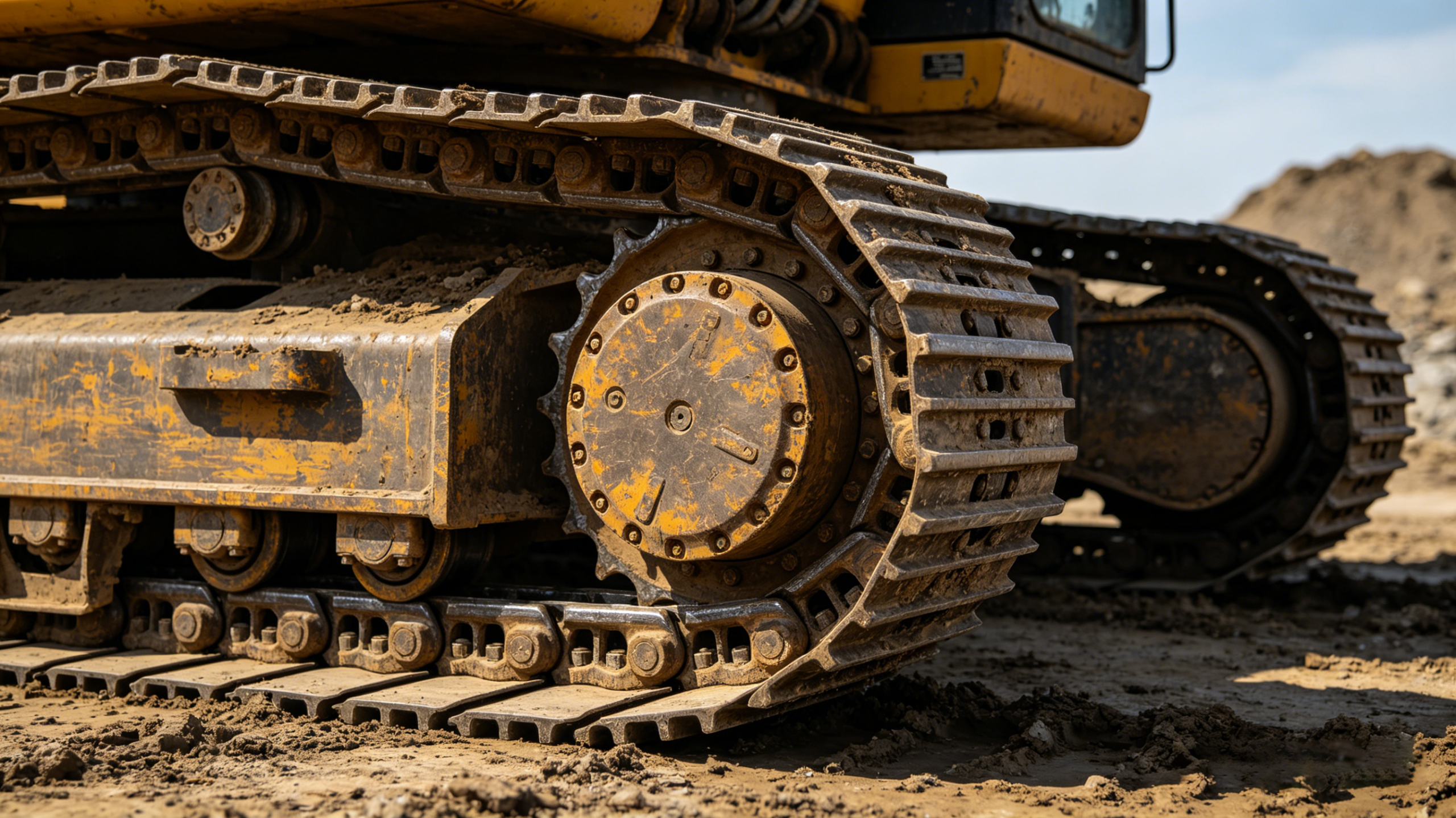
For heavy equipment operators (excavators, bulldozers, etc.), track misalignment and derailment are the most annoying problems. 90% of them are caused by worn or misaligned parts — no disassembly, no mechanic needed! Follow these 3 simple steps to find the faulty part with your hands.
Step 1: Check the Idler Wheel (Tension Wheel) — Top Cause of Misalignment
- Look: Is the idler wheel skewed or not on the track centerline?
- Shake: Wiggle the idler wheel left and right — excessive play means worn bushings and pins.
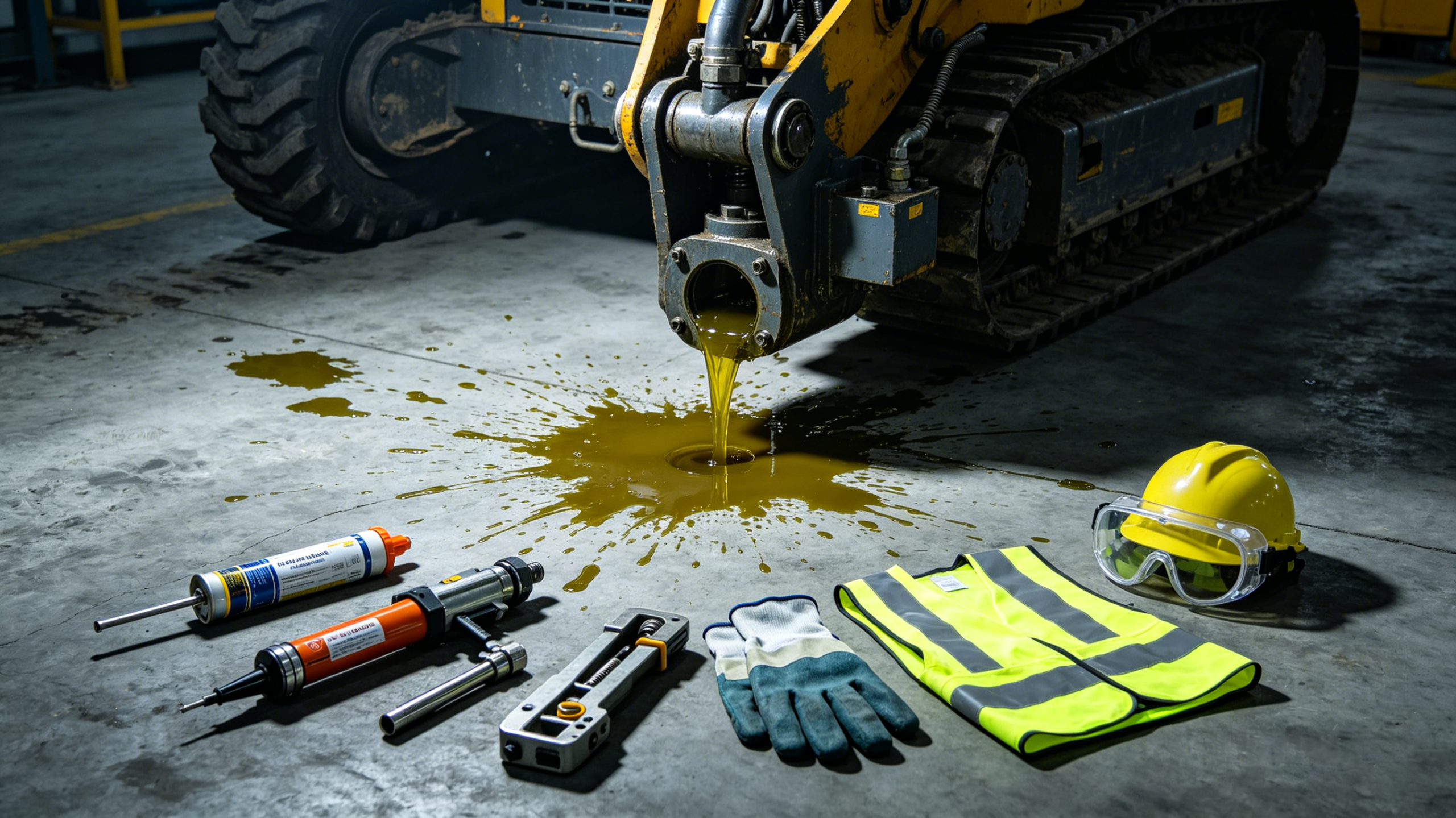
- Tighten: If the track is loose and collapses when pressed — tension cylinder leakage or tension spring failure.
Conclusion: A misaligned idler wheel will definitely cause misalignment; insufficient tension leads to derailment.
Step 2: Check Carrier Rollers & Top Rollers — High-Frequency Derailment Causes
- Look: Are the rollers unevenly worn, leaking oil from the seal, or seized (not rotating)?
- Touch: If one side of the carrier rollers is significantly hot after walking — the roller is seized, causing uneven force.
- Compare: If the left and right tracks have different tightness — uneven wear of the sprockets.
Conclusion: Seized or unevenly worn rollers will make the track “wander” and easily derail.
Step 3: Check Drive Sprocket + Track Links — Main Cause of Frequent Derailment
- Drive Sprocket: Worn, sharpened, chipped teeth can’t grip the chain firmly.
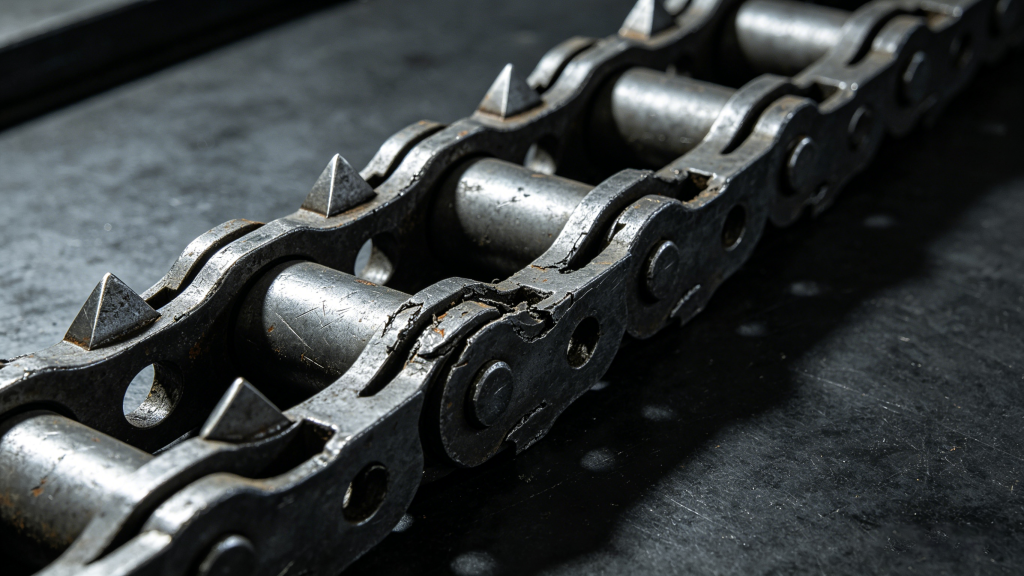
- Track Links: Loose bushings or stretched links make the track longer and unstable in engagement.
- Track Shoes: Deformed or cracked single-side shoes cause natural misalignment when walking.
Conclusion: Poor engagement between the sprocket and track links leads to derailment after a few steps.
Quick Judgment Tip
Run the track in place (empty load). Whichever side misaligns or derails first, focus on checking the idler wheel/carrier roller on that side — it’s almost always accurate, saving you the cost of on-site maintenance.