In the overseas construction machinery parts industry, most practitioners have fallen into the same misunderstanding: bucket teeth are just low-cost wearing parts that can be matched casually. But the real industry logic is precisely the opposite — the accurate selection of bucket teeth directly determines the customer’s construction efficiency, downtime costs, and even your after-sales reputation and repurchase rate.
With the gradual implementation of the ISO performance classification standard for bucket teeth under extreme working conditions, the overseas market has increasingly strict requirements for the wear resistance, impact resistance and adaptability of bucket teeth. Choosing the wrong material or mismatched model will not only cause frequent wear of the customer’s equipment and delay the construction period, but also put you in a vicious cycle of returns, exchanges and after-sales disputes. Today, from the perspective of overseas construction scenarios and trade adaptation, we will concisely explain the core logic of bucket tooth selection, which is suitable for mainstream global engineering scenarios.
I. 3 Mainstream Bucket Tooth Materials, Precisely Matched to Global Working Conditions
There are three main types of bucket tooth materials in the overseas construction machinery market. There is no absolute advantage or disadvantage, only whether they are suitable for the scenario. Accurate correspondence can avoid over-performance or under-performance.
1. High Manganese Steel Bucket Teeth: Must-have for High-Impact Working Conditions
As a classic material commonly used in global mines and heavy infrastructure, the core advantage of high manganese steel is automatic work hardening under strong impact, with full toughness and extremely strong fracture resistance. It is only suitable for high-intensity impact scenarios, such as raw stone mining, hard soil crushing, gravel excavation and other large overseas mines and infrastructure projects.
Key Tip: Not suitable for low-impact working conditions such as soft soil, clay and sand grinding. It cannot form a hardened layer, so the wear resistance cannot be exerted, and it is prone to rapid wear and loss.
2. Wear-Resistant Alloy Steel Bucket Teeth: Cost-Effective Bestseller for Overseas General Use
Formed by precision casting process, with a stable hardness of 48-54HRC, it balances wear resistance and toughness, and is a universal adaptation for overseas municipal engineering, earthwork operations and small and medium-sized infrastructure. It is suitable for conventional working conditions such as clay, sand-gravel mixture and ordinary earthwork excavation, and adapts to most civil and small and medium-sized overseas construction projects.
Core Advantages: Stable quality control, high cost performance, controllable delivery cycle, suitable for bulk trade and regular inventory in stores, and meets the needs of most retail customers and small and medium-sized engineering customers.
3. Tungsten Carbide Reinforced Bucket Teeth: Top Configuration for Ultra-Wear-Resistant Extreme Working Conditions
A tungsten carbide surfacing reinforcement layer is added on the alloy steel matrix, and its wear resistance is more than 3 times that of ordinary bucket teeth, targeting high-end extreme construction scenarios overseas. It is exclusively suitable for high-intensity and high-abrasion working conditions such as granite, hard rock and high-wear ore mining, and is widely used in large overseas quarries and high-end mine projects.
Core Value: Greatly reduce the frequency of bucket tooth replacement, reduce equipment downtime, and perfectly meet the core needs of overseas large-scale projects for construction efficiency and low operation and maintenance costs.
II. Simple Logic for Model Adaptation, Say Goodbye to Blind Selection
Overseas models are complex and model systems are diverse. There is no need to memorize thousands of parameters. Mastering three core adaptation dimensions can achieve rapid and accurate matching:
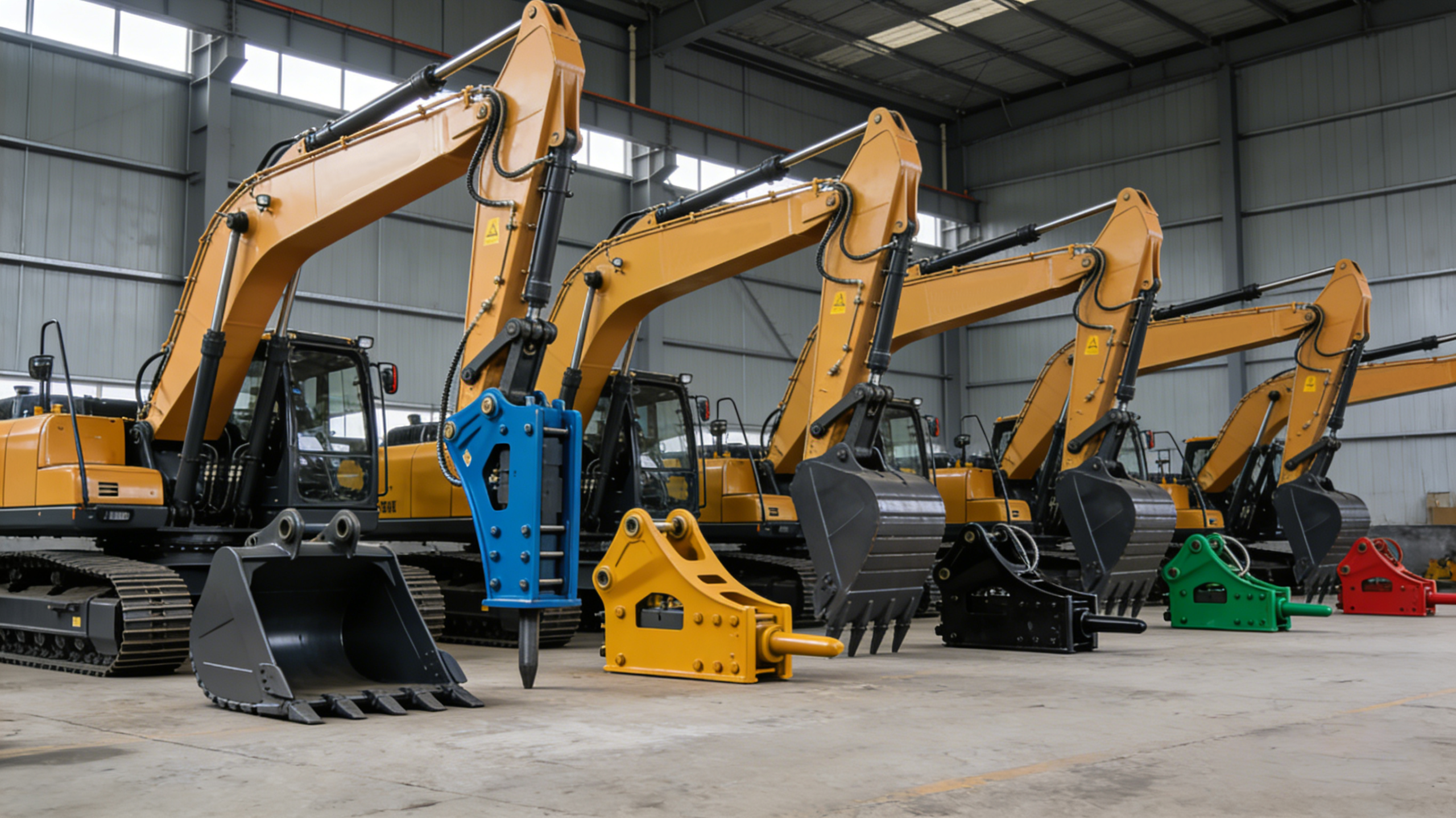
1. Determine the basic specification by tonnage: Small excavators are suitable for light pointed teeth and flat teeth, focusing on flexibility and efficiency; medium and large models are suitable for thickened and reinforced tooth types to bear high-intensity operation loads.
2. Determine the tooth type by working condition: Pointed teeth are used for rock working conditions with stronger penetration; flat teeth are used for earthwork and leveling operations with wider excavation coverage; widened and reinforced tooth types are selected for heavy-duty crushing scenarios.
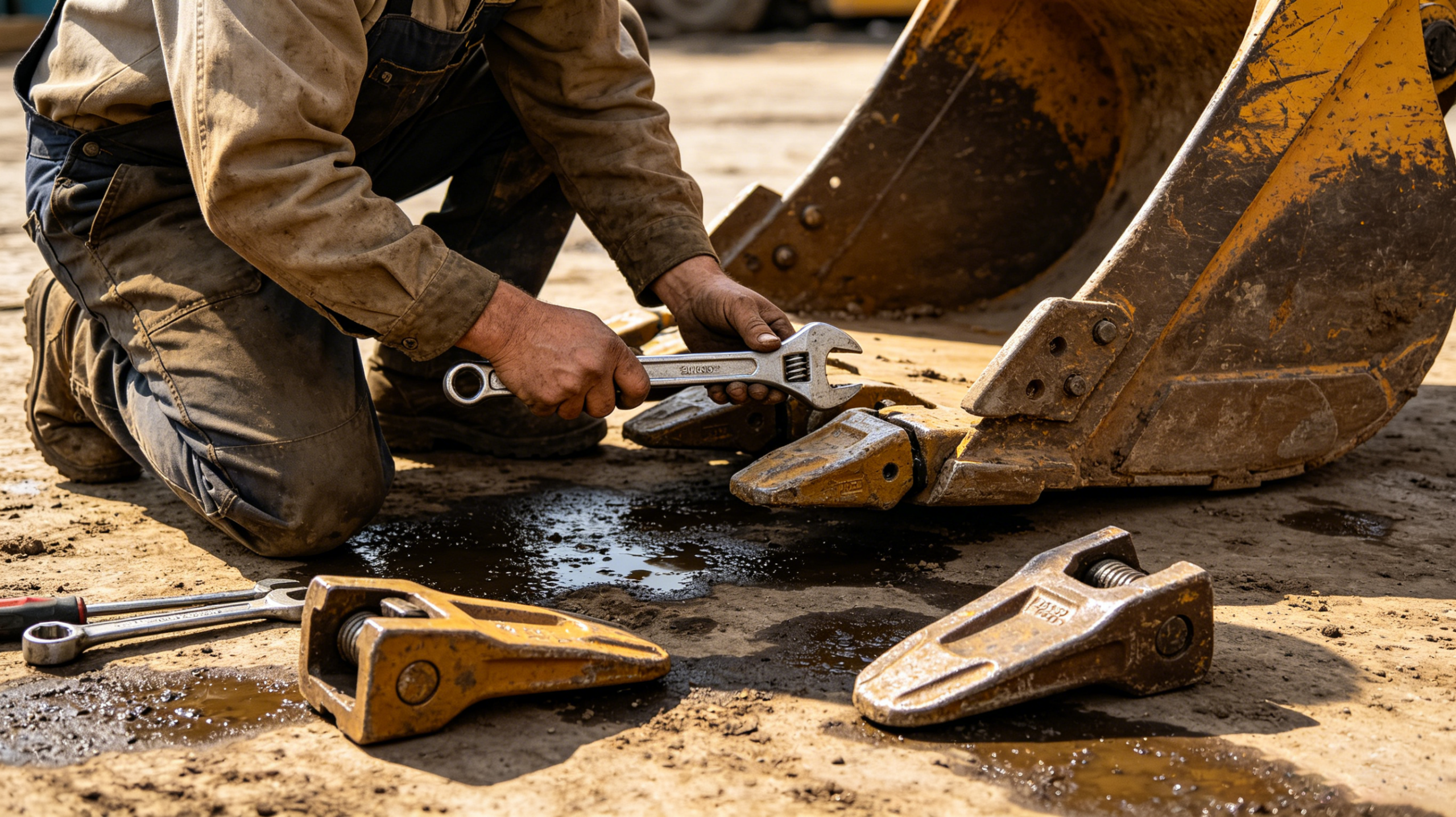
3. Precisely match by tooth seat: Strictly correspond to the original equipment’s tooth seat buckle and size standards to avoid problems such as loose installation, falling off and poor fit, and adapt to mainstream global brand models.
III. New Industry Perspective: The Core of Parts Business is “Precise Adaptation”
For overseas construction machinery parts practitioners, bucket teeth are not low-cost consumables for volume sales, but a core service carrier to retain customers. Low-price mismatching will only lead to frequent after-sales and customer loss. Accurate matching of working conditions + materials + models can help customers reduce operation and maintenance costs, improve construction efficiency, and establish long-term cooperative trust.
Under the trend of global standardization upgrading of engineering parts, professional selection ability is the core competitiveness of parts trade and offline stores. Choosing the right bucket teeth and making accurate adaptation can not only double the customer’s construction efficiency, but also double your business reputation and stabilize profits.