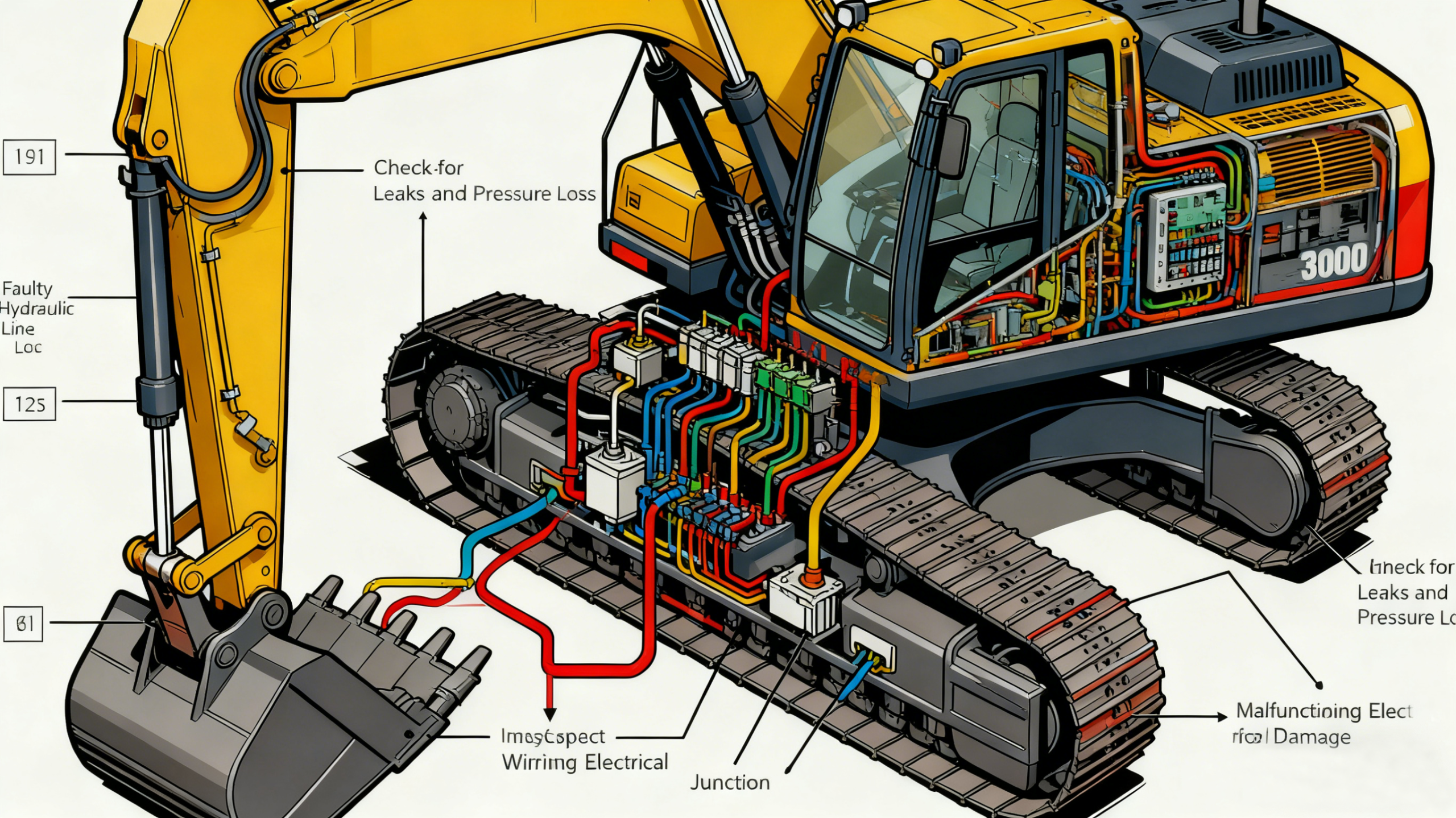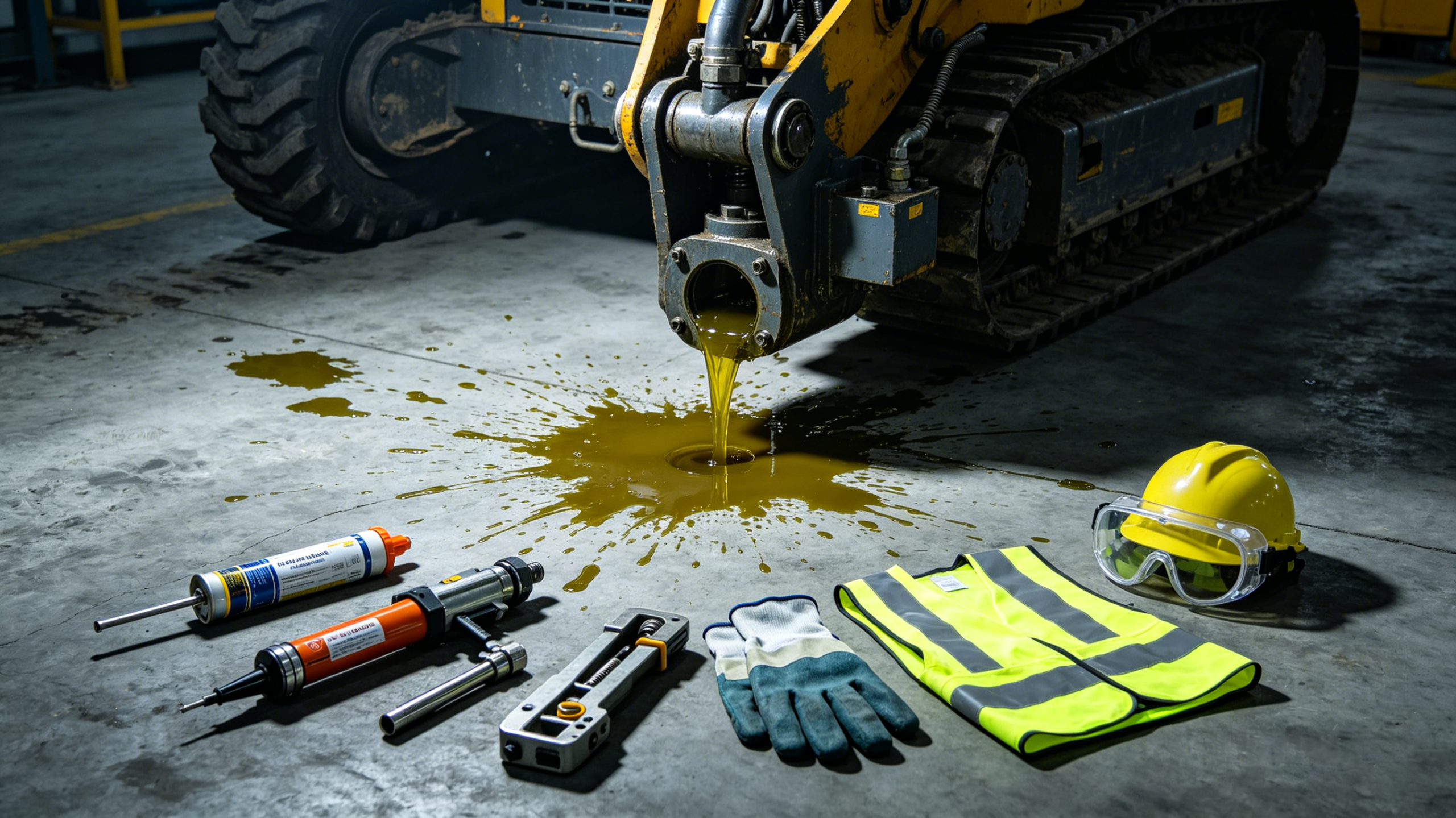
Overheating is the No.1 silent killer of excavators in heavy-duty construction work. Long-term high-temperature operation not only reduces engine power and increases fuel consumption but also triggers severe faults like cylinder deformation, hydraulic system failure, and accelerated component aging.
For global construction machinery parts practitioners, accurate inspection and timely replacement of core cooling accessories are the key to reducing equipment downtime, improving after-sales service quality, and winning customer trust.
Most excavator overheating issues stem from abnormal conditions of three core cooling parts. Below we share practical, on-site inspection key points applicable to all mainstream excavator models, helping you quickly locate faults and provide professional solutions.
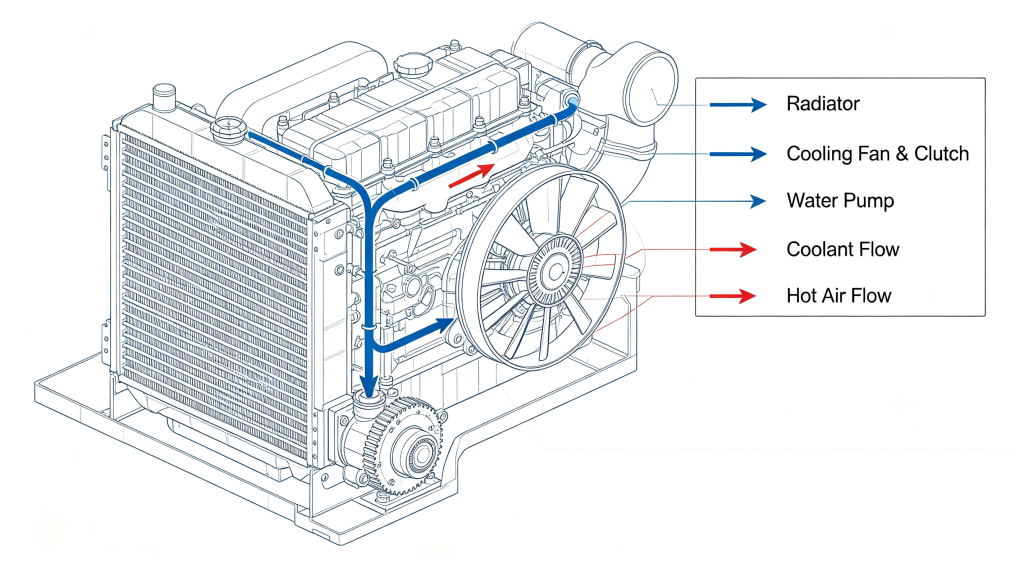
1. Radiator: The Core Heat Dissipation “Heat Exchanger”
The radiator undertakes the core task of cooling engine coolant. It is the most vulnerable to external blockage and damage in construction sites, and 60% of excavator overheating faults are related to radiator abnormalities.
Key Inspection Points
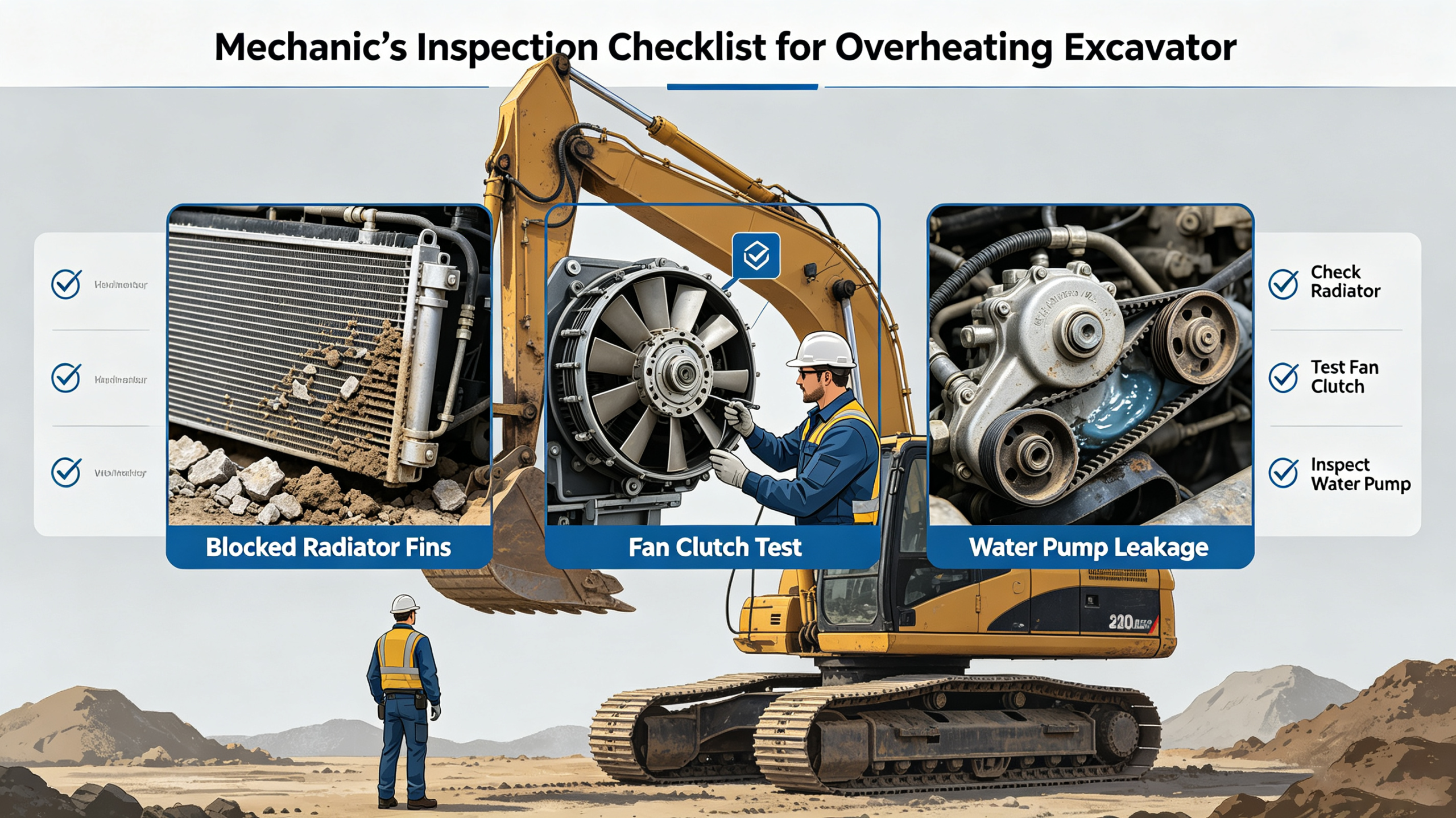
- Surface Blockage Check: Long-term exposure to dust, mud, gravel, crop residues and construction debris will block the radiator fin gaps. Inspect the fin surface for clogging, deformation or bending. Dense blockage will directly reduce heat exchange efficiency and cause rapid temperature rise under load.
- Leakage & Damage Check: Carefully check the radiator core, water pipe joints and welding points for coolant seepage, white scaling marks or crack damage. Slight leakage will lead to insufficient coolant volume and poor heat dissipation; severe cracks will cause sudden overheating and shutdown.
- Internal Scaling Check: Long-term use of unqualified coolant will cause internal scaling and pipeline blockage. Observe whether the coolant circulation is smooth, and check for aging, discoloration and deterioration of the internal medium. Scaling will narrow the flow channel and greatly reduce heat dissipation efficiency.
Professional Tip
Regular high-pressure air cleaning (avoid high-pressure water flushing to prevent fin deformation) and regular coolant replacement can effectively extend the radiator service life. Replace the radiator in time if there is severe internal scaling or irreversible core damage.
2. Cooling Fan & Fan Clutch: The Power Source of Air Cooling
The cooling fan provides forced air circulation for the radiator, and the fan clutch controls the fan speed linkage with engine temperature. Unstable fan operation is a common hidden cause of intermittent overheating of excavators.
Key Inspection Points
- Fan Blade Condition: Check the fan blades for deformation, cracking, wear or dust accumulation. Damaged blades will cause uneven air volume and reduced air supply; excessive dust will affect air convection and weaken cooling effect.
- Fan Clutch Performance: This is the most easily overlooked key point. Test the temperature control sensitivity of the fan clutch. At low engine temperature, the fan should rotate slowly with low resistance; when the temperature rises to the working threshold, the fan should lock up and rotate at high speed stably.
- Abnormal Noise & Vibration: Listen for abnormal friction noise and violent vibration during fan operation. Clutch aging, bearing wear and loose installation will lead to fan speed failure, resulting in insufficient heat dissipation air volume.
Professional Tip
For hydraulic-driven and electronically controlled fans, check the hydraulic pressure and circuit sensor data synchronously. Timely replace aging fan clutches and worn bearings to avoid intermittent overheating faults that are difficult to troubleshoot.
3. Water Pump: The Core Power of Coolant Circulation
The water pump is the “heart” of the cooling system, responsible for driving coolant circulation between the engine and radiator. Once the water pump fails, the cooling system will completely lose circulation capacity, leading to rapid overheating of the equipment.
Key Inspection Points
- Circulation Efficiency Check: After the engine warms up, observe the coolant circulation state. If the temperature difference between the upper and lower water pipes of the radiator is too large and the water temperature rises rapidly, it indicates that the water pump impeller is worn or slipped, resulting in insufficient circulation power.
- Sealing & Leakage Check: Inspect the water pump shaft seal and gasket for coolant leakage and water scale accumulation. Long-term leakage will cause coolant loss and air intake in the pipeline, which will hinder normal circulation and cause local high temperature of the engine.
- Belt & Transmission Status: Check the tension and wear of the water pump drive belt. Loose, aging or cracked belts will cause insufficient water pump speed, reduce coolant flow, and trigger heat dissipation failure under heavy load.
Professional Tip
The water pump is a wearing part with a fixed service cycle. It is recommended to replace it synchronously during engine regular maintenance to avoid sudden failure and construction shutdown losses.
Final Summary & After-Sales Advice for Practitioners
Excavator overheating faults are never single problems. In 90% of cases, they are caused by the aging, blockage or damage of radiator, cooling fan assembly and water pump.
As overseas construction machinery parts suppliers and maintenance practitioners:
✅ Master the three-core accessory inspection logic to quickly diagnose faults and improve service efficiency;
✅ Recommend customers to replace wearing parts regularly based on working conditions to reduce failure rate;
✅ Provide high-matching standard cooling accessories to ensure stable equipment operation and long-term customer cooperation.