For construction machinery parts professionals, hydraulic leaks are more than just a hassle—they’re costly, disruptive, and dangerous. When a leak strikes on-site, knowing how to stop it temporarily (and safely) can save downtime, protect your team, and prevent further equipment damage.
Temporary Leak Stopping Methods (Pro-Approved):
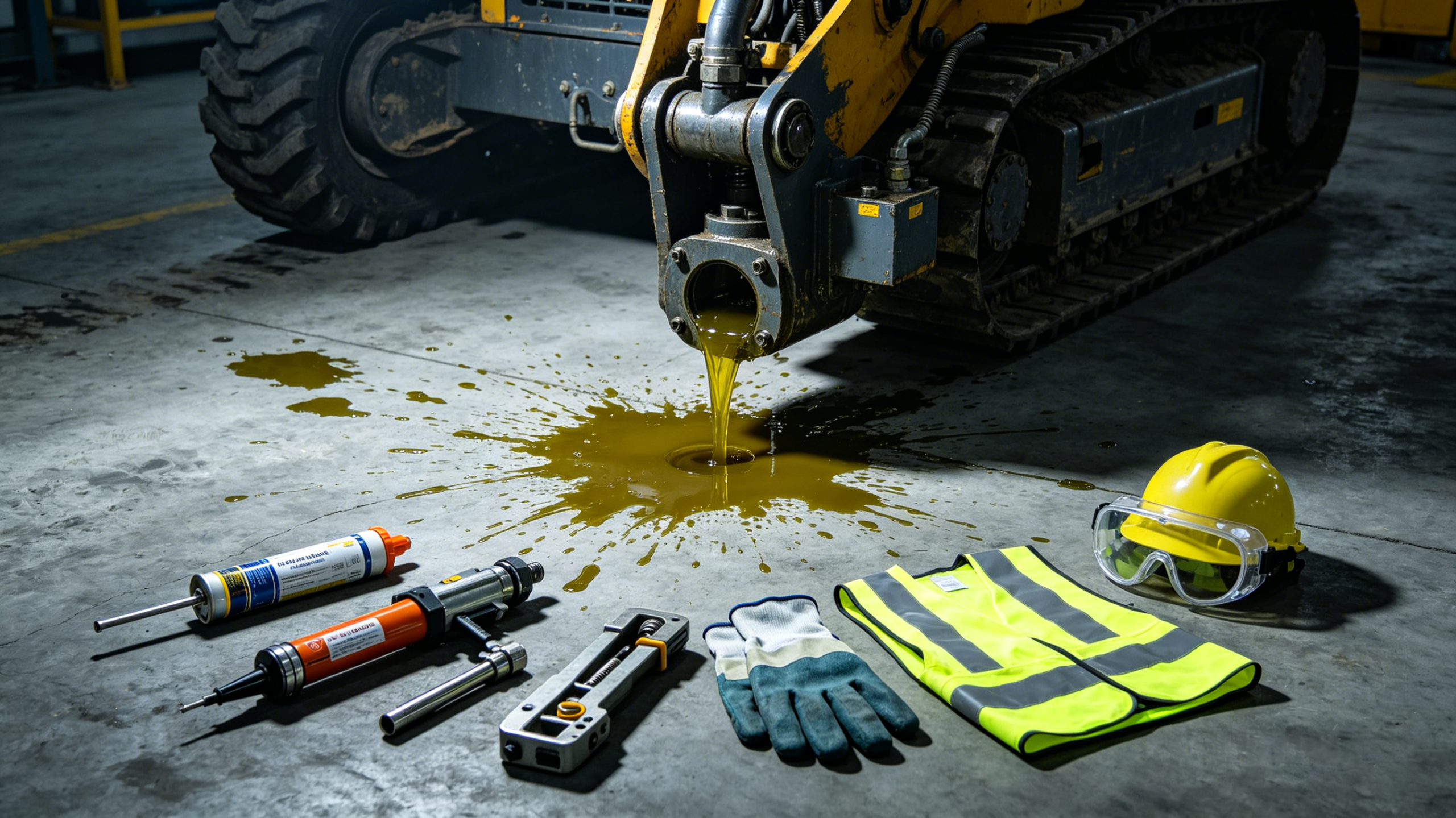
✅ Leak Sealant: Use professional-grade hydraulic stop leak (e.g., BlueDevil or Bar’s Leaks) – shut down equipment, add the formula to the reservoir per instructions, and run the system 1-2 hours until leaks seal. Safe for all petroleum and synthetic hydraulic fluids.
✅ Mechanical Clamping: For hose or fitting leaks, use compatible clamps with seal pads – position the clamp over the leak, tighten evenly to create a secure seal. Ideal for quick fixes on high-pressure lines (up to 10MPa).
✅ Emergency Wrapping: For small pinhole leaks, wrap the area with oil-resistant tape or fabric, then secure with a clamp. This buys time until a permanent repair with proper parts can be made.
Non-Negotiable Safety Precautions:
⚠️ Depressurize First: Always shut off the hydraulic power unit, cycle controls 5-10 times to release residual pressure, and verify gauges read 0 bar before acting. Trapped pressure can cause sudden movement or fluid injection injuries.
⚠️ Wear Proper PPE: Minimum gear includes oil-resistant gloves, safety goggles, face shield, and steel-toed boots. For large leaks, add chemical-resistant clothing – never skip PPE, as hydraulic fluid injection can lead to amputation.
⚠️ No Hand Checks: Never use your hands to find leaks – use a piece of cardboard or wood to detect pinholes. High-pressure fluid can penetrate skin, requiring emergency surgery within 6-8 hours.
⚠️ Secure the Area: Use mechanical supports (safety struts, jacks) if working near lifted components – never rely solely on hydraulic lock. Keep flammables away, as hydraulic oil can ignite at 200-250°C.
Remember: Temporary fixes are just that – always replace worn seals, hoses, or fittings with quality parts as soon as possible. Your safety and equipment reliability depend on it!