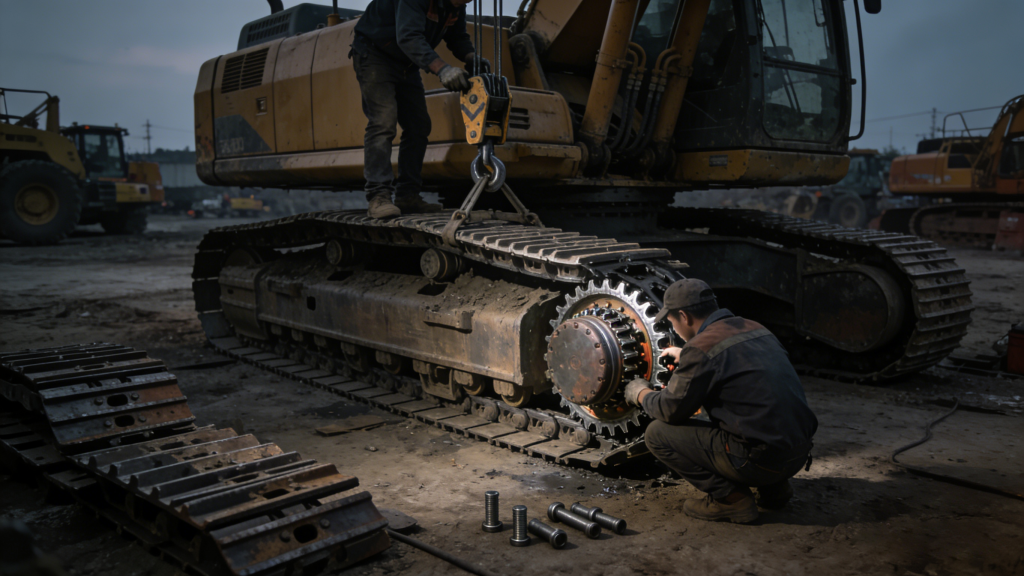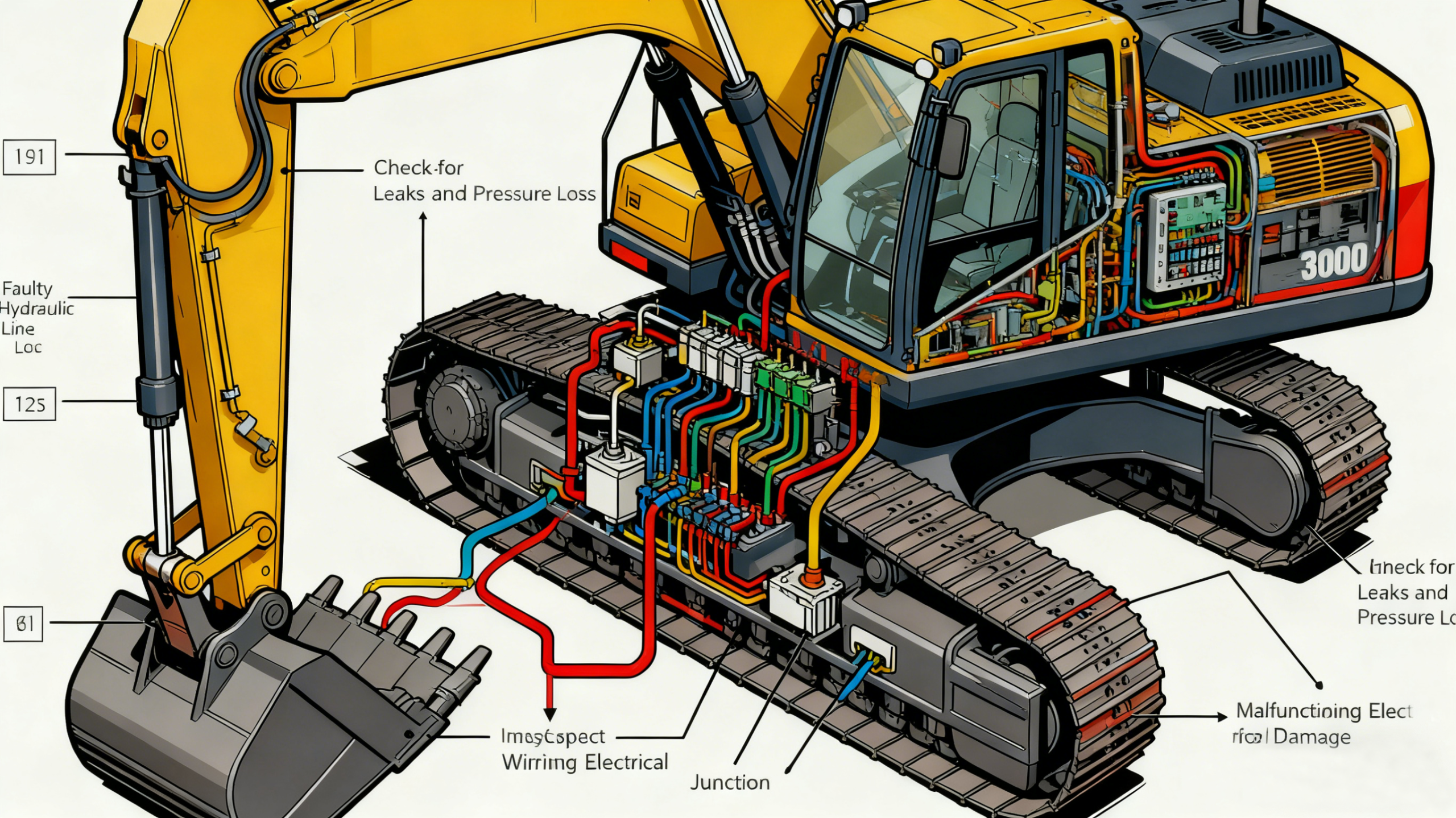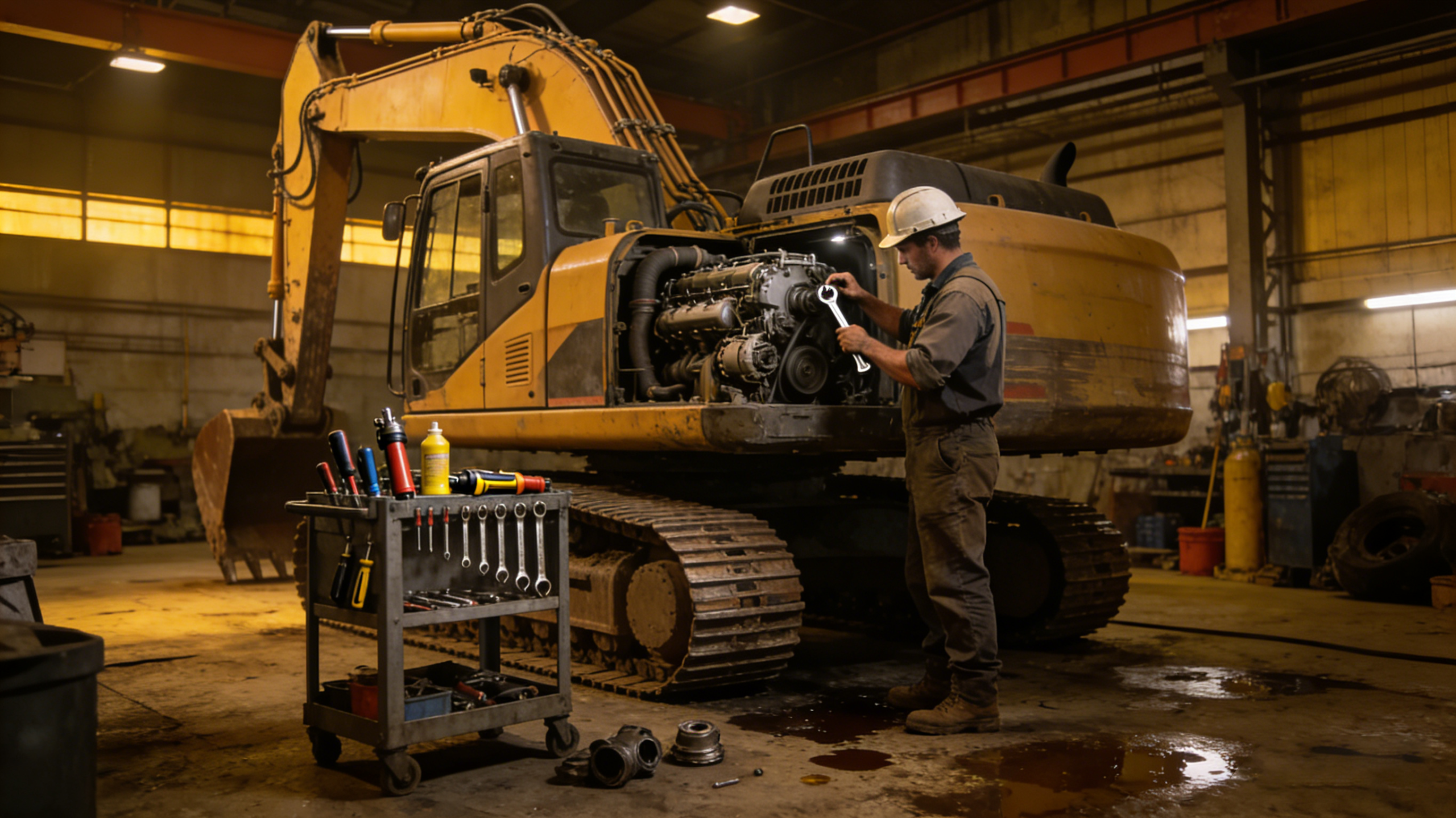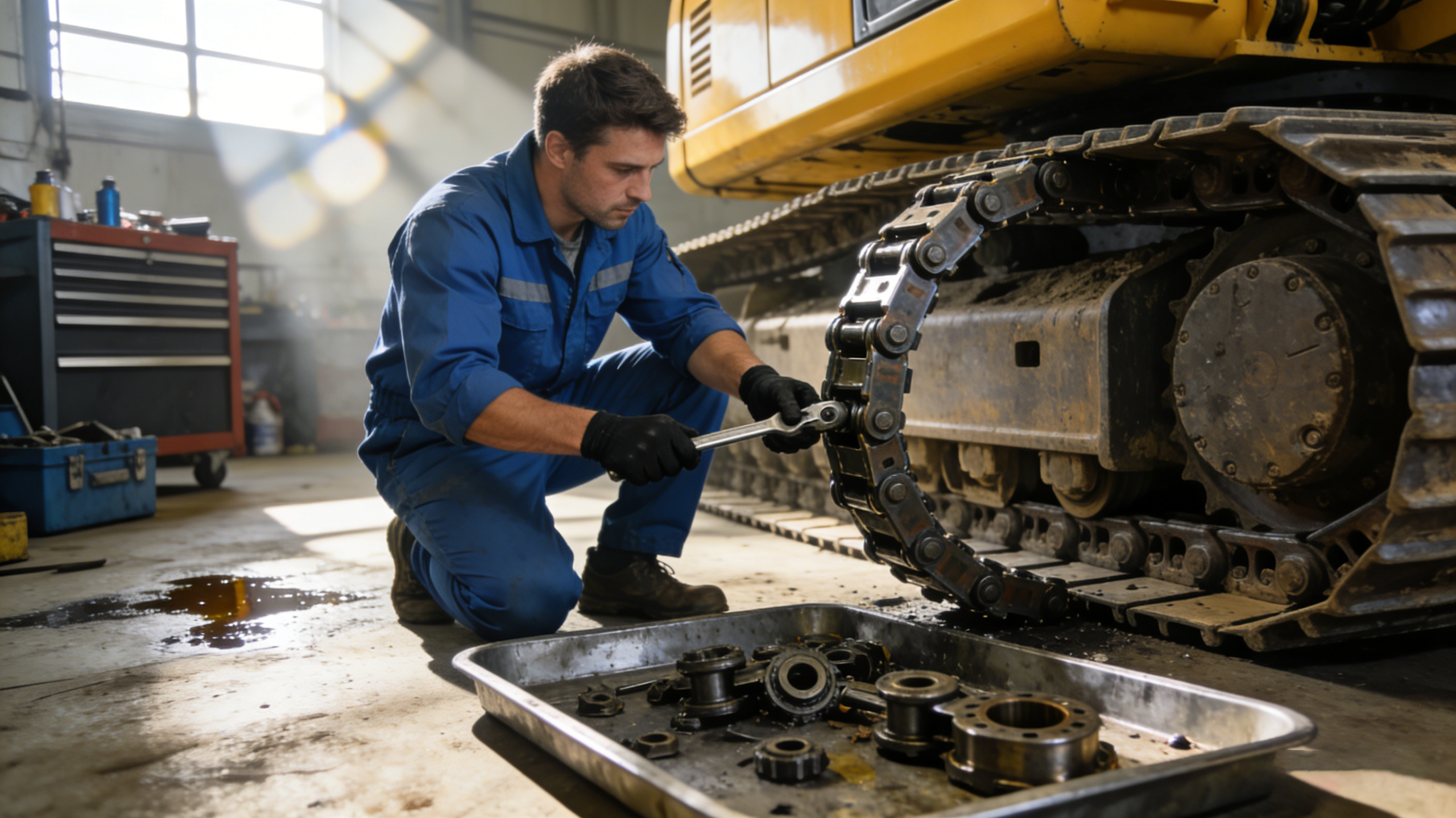
For tracked equipment such as excavators, bulldozers, and snow groomers, track links are the “walking lifeline” — they are in constant severe friction with the ground and track shoes, bear the weight of the entire machine and operational impact forces, so wear is inevitable.
Many machine owners feel troubled when encountering track link wear: repairing it, they are afraid it won’t last long after repair; replacing it, the cost of new track links is too high, especially for large-tonnage equipment, which costs thousands to tens of thousands of yuan for a full set.
In fact, the answer is simple:not all wear needs replacement, nor can all wear be repaired! Today, we will help you sort out the core standards for “repairable” and “must-replace” to accurately avoid pitfalls, save money and ensure durability!
I. These Scenarios: Track Links Can Be Repaired with Confidence!
For wear that meets the following conditions, priority should be given to repair (methods such as welding overlay, quenching, grinding). The service life after repair can reach 70%-90% of that of new parts, and the cost is only 30%-50% of new parts, achieving maximum cost-effectiveness!
1. Uniform Surface Wear, Wear Amount Within Limit
The contact surface of the track link (the surface in contact with track shoes and drive wheels) has uniform wear, chipping, or scratches, but the wear depth ≤ 3mm (slightly different for different models, subject to the manufacturer’s manual), and there is no local depression or groove-like wear.
✅ Repair Logic: Fill the worn parts through welding overlay, then restore hardness through quenching (reaching HRC55 or above), restore the precision of the contact surface, and not affect the overall stress structure of the track link.
2. Local Minor Corrosion, Edge Chipping, No Cracks
When operating in humid, dusty, or gravel conditions for a long time, the edge of the track link may have minor corrosion or small-area edge chipping (chipping size ≤ 5mm), but after detection with a flaw detector, there areno internal cracks or metal fatigue.
✅ Repair Logic: Grind to remove the corrosion layer and edge chipping burrs, and perform local welding overlay repair on the damaged parts to avoid further aggravation of wear.
3. Slight Ellipticity of the Hole, Normal Fit Clearance
The connecting hole of the track link (the part where the pin passes through) has slight ellipticity due to long-term stress, but the ellipticity ≤ 0.2mm, the fit clearance with the pin ≤ 0.5mm, and there is no jamming or looseness during rotation.
✅ Repair Logic: Repair the precision of the hole diameter through reaming, bushing insertion and other methods to ensure that the fit clearance with the pin meets the standard and avoid the decrease of transmission efficiency.
4. Single Link Wear, Other Track Links in Good Condition
If only a single link or a few track links are worn, and the other track links are uniformly worn without deformation, the worn track links can be repaired individually without replacing the entire set, which greatly reduces the cost.
II. These Scenarios: Don’t Hesitate! Replace Track Links Directly
When the track link has the following “fatal damages”, the strength and safety cannot be guaranteed after repair. Forced repair will only lead to secondary damage (such as pin breakage, track derailment, increased wear of drive wheels), and even cause operational accidents. It must be replaced directly!
1. Excessive Wear, Decreased Structural Strength
• The wear depth of the track link contact surface > 3mm, or local wear forms grooves and depressions, resulting in a significant reduction in the stress-bearing area;
• The thickness of the track link (body thickness) is reduced by ≥ 20% due to wear, which cannot bear the weight of the entire machine and operational impact forces, and is prone to breakage.
2. Cracks, Regardless of Size
This is the most dangerous signal! Whether there are visible cracks on the track link body, the edge of the connecting hole, or the stress-bearing part, or internal cracks are found through flaw detection, it must be replaced immediately.
❌ Risk Warning: Cracks will expand rapidly due to vibration and stress during operation, eventually leading to track link breakage and causing serious accidents such as track derailment and equipment rollover.
3. Severe Ellipticity and Deformation of the Connecting Hole
The ellipticity of the connecting hole > 0.2mm, or the hole diameter is deformed due to wear and impact, the fit clearance with the pin > 0.5mm, and obvious looseness and shaking occur.
❌ Harm: It will cause jamming and abnormal noise of track transmission, increase the wear of pins and drive wheels, and even cause pin movement and detachment.
4. Track Link Deformation and Distortion
The track link body is distorted and deformed due to overloading and impact (such as forced escape when the equipment is trapped in potholes, collision with obstacles), or the connecting hole is not perpendicular to the contact surface.
❌ Problem: Deformed track links cannot fit accurately with track shoes and drive wheels, resulting in uneven stress and accelerating the wear of the entire track system.
5. Batch Track Link Aging and Fatigue Wear
If the equipment has been used for a long time (such as more than 5 years, operating hours exceeding 10,000 hours), the entire set of track links is generally worn and aged, or has been repaired more than twice, it is recommended to replace the entire set to avoid other parts being affected by single link damage.
III. Key Reminders: Precautions After Repair/Replacement
- Choose the Right Repair Process: Prioritize the “welding overlay + quenching” process to ensure that the hardness of the repaired part meets the standard; avoid direct use after simple grinding, which seems usable in the short term but wears faster in fact.
- Recognize Quality When Replacing: Prioritize original factory or large-brand auxiliary factory track links, which have guaranteed material and precision; do not buy low-quality parts for cheap, as low-quality track links have poor wear resistance and will be severely worn in 3-6 months.
- Regular Inspection and Maintenance: Check the wear and looseness of track links before and after operation, and timely adjust the track tension (excessively tight tension will increase wear, and excessively loose tension is prone to derailment); lubricate the pins regularly to reduce friction.
- Adapt to Working Conditions: When operating in harsh working conditions such as gravel and mud, try to reduce the driving speed, avoid forced impact, and extend the service life of track links.
To sum up: Slight wear, no cracks, no deformation — repairable; excessive wear, cracks, deformation — must replace!
The core of track link repair and replacement is to balance “cost” and “safety”. Blind repair or replacement will do more harm than good. If you are not sure about the wear degree, it is recommended to find professional maintenance personnel for testing, accurate judgment and scientific treatment!
#Tracked Equipment #Track Link Maintenance #Construction Machinery Maintenance #Money Saving Tips